

An integrated discovery platform
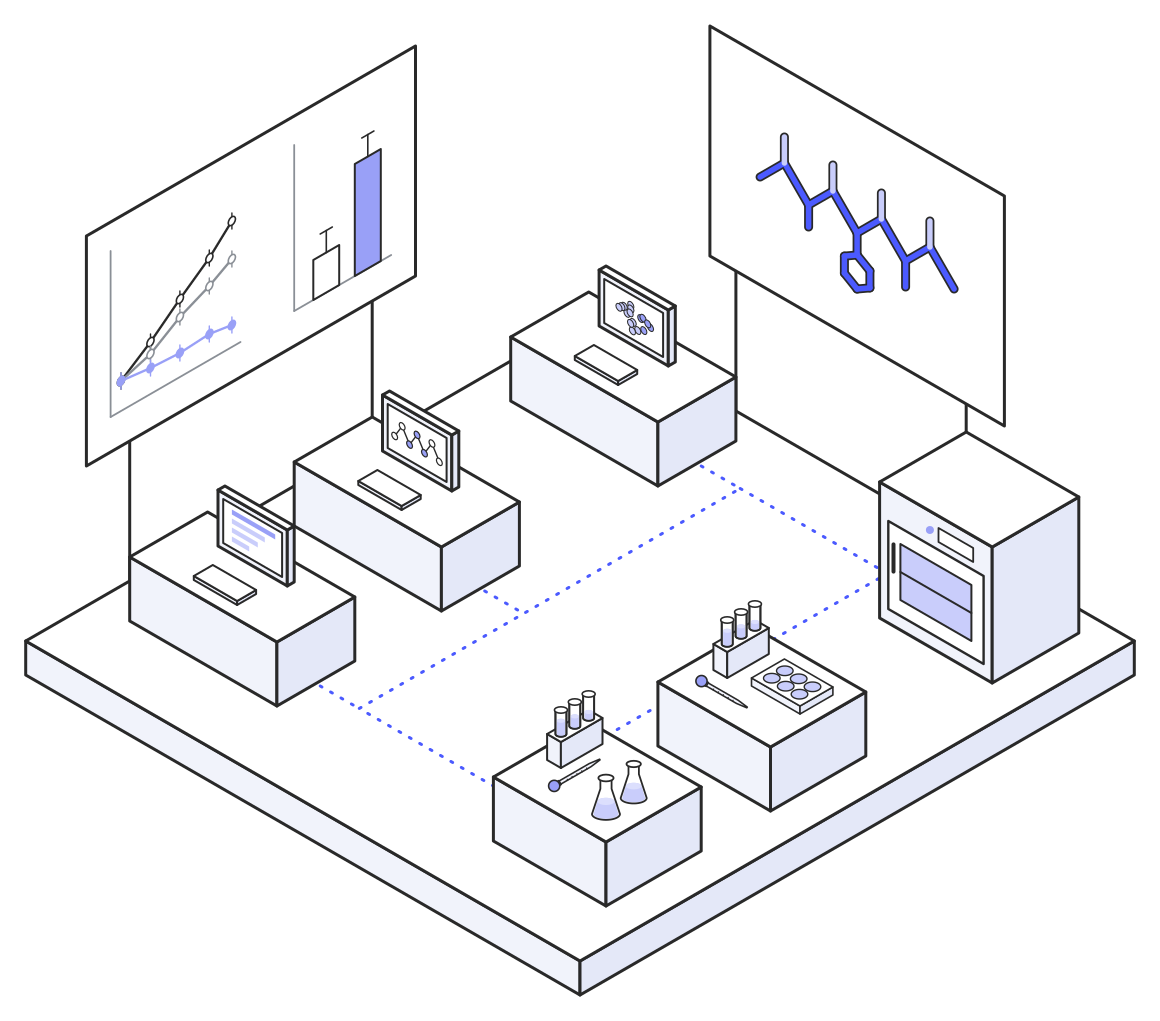
Our platform brings together a range of scientific expertise within a workflow designed to accelerate the discovery of new therapeutic peptides targeting extracellular signaling.
It combines:
- extracellular matrix biology
- cancer biology
- structural modeling
- peptide engineering
- experimental validation
How does our platform work?
Apmonia Therapeutics’ platform follows a discovery process that combines computational approaches with biological validation.
 1
Characterize targets
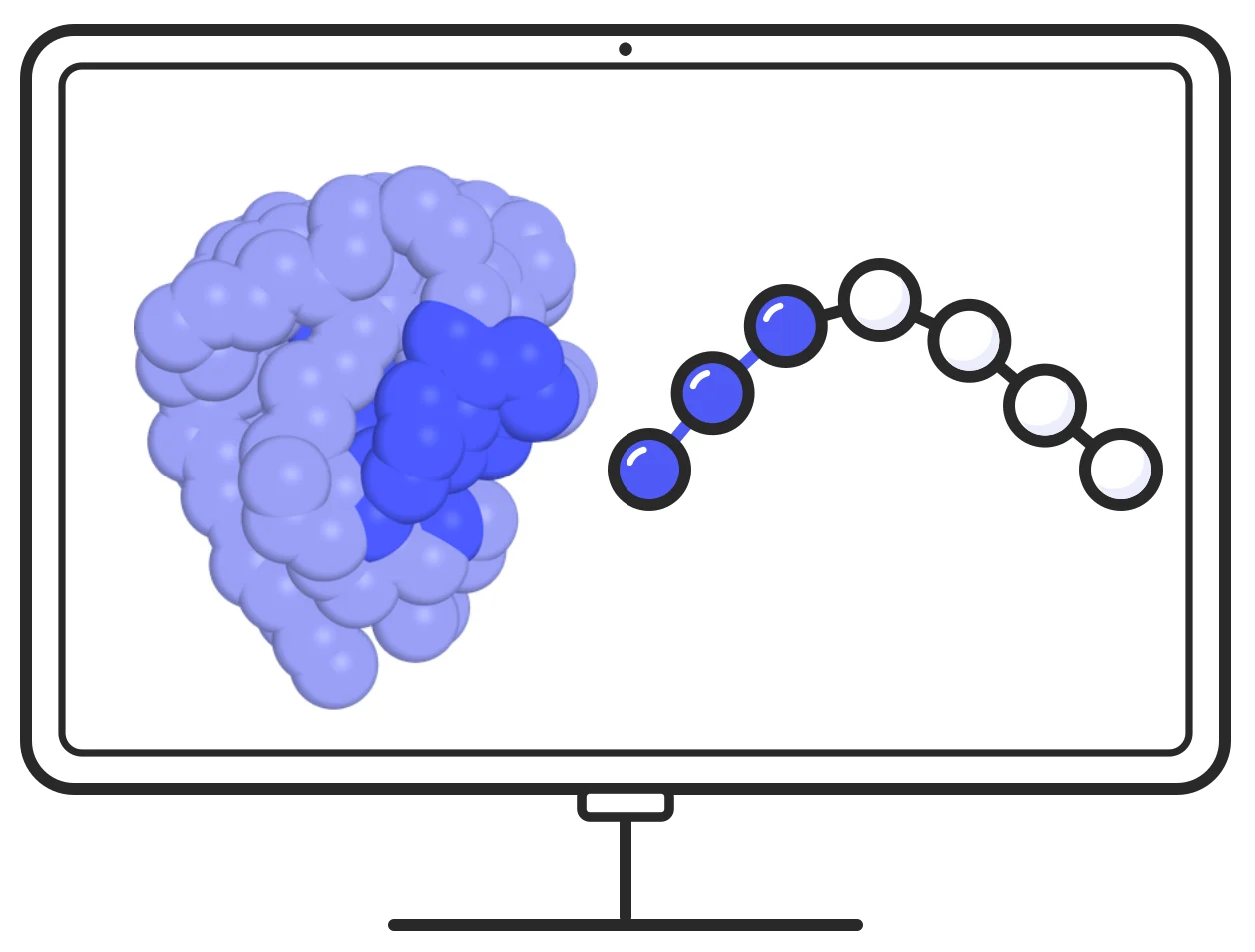
We use structural modeling approaches to characterize known extracellular proteins involved in disease mechanisms and map their interaction interfaces.
 2
Design peptides
Based on these interaction interfaces, structure-guided design approaches help us design and prioritize peptide candidates intended to modulate specific protein-protein interactions, including those traditionally considered undruggable.
 3
Optimize candidates
The candidate peptides are then optimized to improve their affinity, selectivity, stability, and biological activity.
 4
Validate experimentally
Candidates are evaluated using biophysical, biochemical and cellular assays to assess target binding and biological activity and prioritize candidates for further development. Selected candidates are further evaluated in relevant in vivo models.

The technologies at the heart of our platform
Molecular modeling
Structural modeling, molecular dynamics and metadynamics help characterize extracellular protein-protein interactions and guide peptide design.
AI-assisted design
The platform uses computational approaches and artificial intelligence tools to support peptide design and candidate optimization.
Peptide engineering and validation
Candidate optimization is combined with iterative experimental testing to select peptides based on target binding, biological activity, stability and manufacturability, including suitability for scalable chemical synthesis.
A platform designed to generate multiple therapeutic assets
Apmonia’s portfolio includes TAX2 (AP-01), targeting the TSP-1/CD47 interaction in an ongoing Phase 1/2a study; AP-04, targeting the cathepsin D/LRP-1 interaction in oncology; and AP-02, a preclinical cardiovascular program. Our current discovery capabilities build on the research underpinning these programs and support the development of new peptide candidates.
Discover our pipeline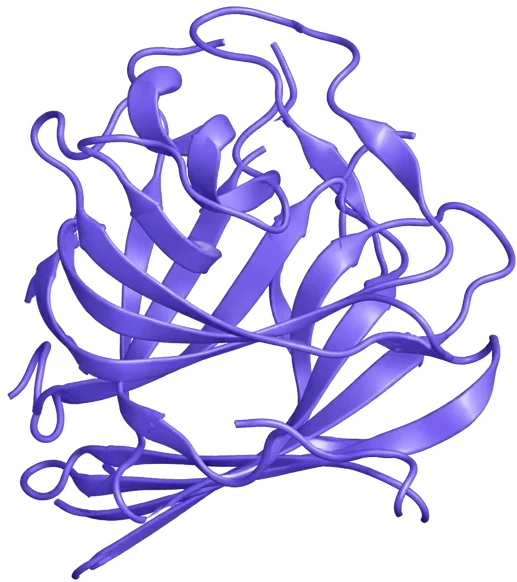
What sets our platform apart?
Expertise focused on the extracellular matrix
A platform specifically designed to address challenging extracellular protein-protein interactions involved in disease mechanisms.
Structure-guided discovery
Modeling approaches for designing peptides that target complex protein interactions.
An integrated workflow
An iterative process linking computational discovery, optimization, and experimental validation.
An asset generation engine
An integrated platform supporting the design and optimization of new peptide candidates.